Review: Happy Sewing Cat 20oz Tumbler Design for Crafters
As a designer who spends more time at the hoop than away from it, I approach every new digital embroidery file with a mix of curiosity and skepticism. We've all been there: you buy a cute graphic, load it up, and realize the stitch density is a nightmare or the details vanish on textured fabric. Today, I'm taking a close look at the Happy Sewing Cat 20oz Tumbler Design. While this asset is technically categorized under Tumbler Wraps and Graphics, my job is to figure out if it translates well into the physical world of thread and fabric for real embroidery projects.
First Impressions: Mood and Visual Personality
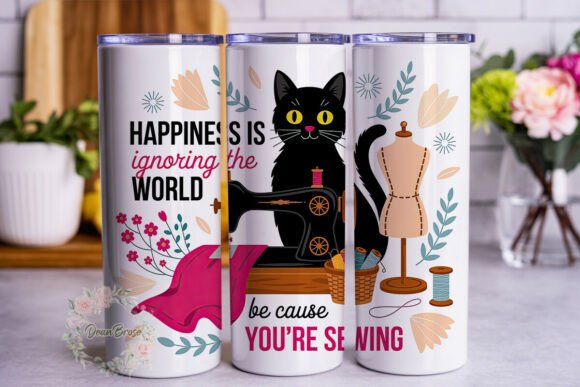
The first thing that strikes me about the Happy Sewing Cat 20oz Tumbler Design is its playful yet focused energy. The theme immediately resonates with anyone in the crafting community. It's not just a generic animal; it's a character that speaks directly to our tribe. The layout, spanning dimensions of 9.3″ x 8.2″ in its original high-resolution form, suggests a design meant to make a statement. When I visualize this converted into a machine embroidery design, I see potential for a bold centerpiece.
The visual personality feels warm and inviting. For an Etsy seller or small shop owner, this kind of imagery builds instant rapport with customers. It says, "I understand your hobby," which is powerful for branding. However, because the source files are PNGs intended for sublimation or printing, the transition to stitching requires careful planning. The charm lies in the expression of the cat and the surrounding elements, which need to be preserved when translating from pixels to satin stitch or fill stitch patterns.
Real-World Application: Beyond the Tumbler
Let's move past the intended use as a wrap and talk about where this design actually shines in an embroidery context. I recently imagined a scenario for a local boutique looking for unique custom apparel. They wanted something for their spring collection that wasn't just another floral motif. The Happy Sewing Cat 20oz Tumbler Design would be perfect digitized onto a heavyweight cotton tote bag. The large scale allows for significant detail, making the finished product feel premium rather than mass-produced.
Consider a sweatshirt embroidery project for a crafting retreat. Placing this design on the back of a cozy fleece hoodie creates a uniform look for attendees. The whimsical nature of the cat fits perfectly with the relaxed vibe of a workshop. Alternatively, think about baby embroidery. If scaled down appropriately and simplified, the character could adorn a nursery blanket or a bib, serving as a delightful personalized gift for a new parent who loves to sew.
For those running a craft business, versatility is key. This design could easily become an embroidered patch applied to denim jackets or canvas aprons. The key here is recognizing that while the original is a graphic for a curved tumbler surface, its composition works well on flat planes too, provided the digitizing respects the original art's flow.
Technical Considerations and Fabric Choices
Here is where we need to be realistic. The Happy Sewing Cat 20oz Tumbler Design comes as a high-resolution PNG (300 DPI), not a pre-digitized stitch file. This is a crucial distinction. You cannot simply load this into your machine. You must either digitize it yourself or hire a professional digitizer to convert the graphic into a usable embroidery file. This step determines everything from stitch density to the type of stitches used.
If you are converting this for a tote bag design using canvas or duck cloth, you have a stable foundation. However, if you attempt this on a stretchy t-shirt or a thin rayon blouse, you risk distortion. The intricate details of the cat's face or any text elements like "Happy Sewing" could pull apart if the stabilizer isn't robust enough. I always recommend testing on scrap fabric first. Cut a piece of the actual garment material, hoop it with your chosen stabilizer, and run a test stitch-out.
Pay close attention to thread colors. The original graphic likely uses gradients or subtle shading. In embroidery, we often have to approximate these with solid thread colors. You might need to use a running stitch for fine outlines and dense fill stitches for the body of the cat to maintain contrast. On dark fabrics, ensure your underlay is sufficient so the garment color doesn't peek through and muddy the design.
Navigating Challenges: Small Hoops and Textured Fabrics
One limitation to consider is the sheer size of the original artwork. At over 9 inches tall, this design will not fit in a standard 4x4 hoop. You will need a large hoop capability on your machine or plan to split the design for re-hooping, which introduces alignment risks. If you are working on a cap or a curved surface, the large flat area of the design might cause puckering unless you use a cap frame and appropriate backing.
Textured fabrics like towels or terrycloth present another hurdle. The loops of the fabric can swallow small details. If you plan to use this for a kitchen towel or bath set, you may need to simplify the design, removing tiny internal details that won't stitch out cleanly. Similarly, be wary of dense stitch areas on items that need frequent washing, like holiday embroidery on table runners. High density can make the fabric stiff and uncomfortable.
Enhancing Brand Value and Customer Trust
Why go through the trouble of converting a graphic? Because a well-executed embroidered version of the Happy Sewing Cat 20oz Tumbler Design adds tangible value. A printed image can fade or peel; high-quality embroidery signals durability and craftsmanship. For an Etsy seller, offering an embroidered version of a popular trend differentiates your small shop product from the sea of sublimated mugs and tumblers.
It enhances brand consistency. If your shop specializes in handmade goods for creatives, this design reinforces your niche. It shows you aren't just slapping logos on things; you are curating designs that resonate with your audience's identity. This level of thoughtfulness builds customer trust and encourages repeat business. Whether it's a wedding gift for a seamstress friend or merchandise for a quilting guild, the tactile quality of embroidery elevates the perceived worth of the item.
Practical Notes for the Professional Maker
Before you commit to production, keep these checklist items in mind:
- Verify Licensing: Since this is a purchased graphic, confirm the license terms. Does it allow for commercial use in physical products? Can you sell the digitized version? Always check before listing items for sale.
- Digitizing Strategy: Decide between a full fill, applique, or mixed technique. An applique design approach might reduce stitch count and add texture, which could be charming for this specific cat character.
- Mockup Testing: Create black and white mockups to check contrast. If the design relies solely on color to define shapes, it might get lost in single-color stitching.
- Hoop Size Confirmation: Ensure your machine can handle the scale or have a plan for splitting the design seamlessly.
- Fabric Compatibility: Avoid using this complex design on slippery silks or highly stretchy knits unless you are an expert in stabilization.
In conclusion, the Happy Sewing Cat 20oz Tumbler Design is a versatile asset with strong emotional appeal for the crafting community. While it requires the extra step of professional digitizing to become a true machine embroidery design, the payoff is a unique, high-value product that stands out in the marketplace. With careful attention to fabric choice, stabilization, and stitch planning, this graphic can transform from a digital file into a beloved handmade product that customers will cherish.